Design verification
Potholing for design
Expose crossings at proposed boring, trenching, or tie-in points so the design engineer gets confirmed depth and offset — before mobilization, not after a strike.
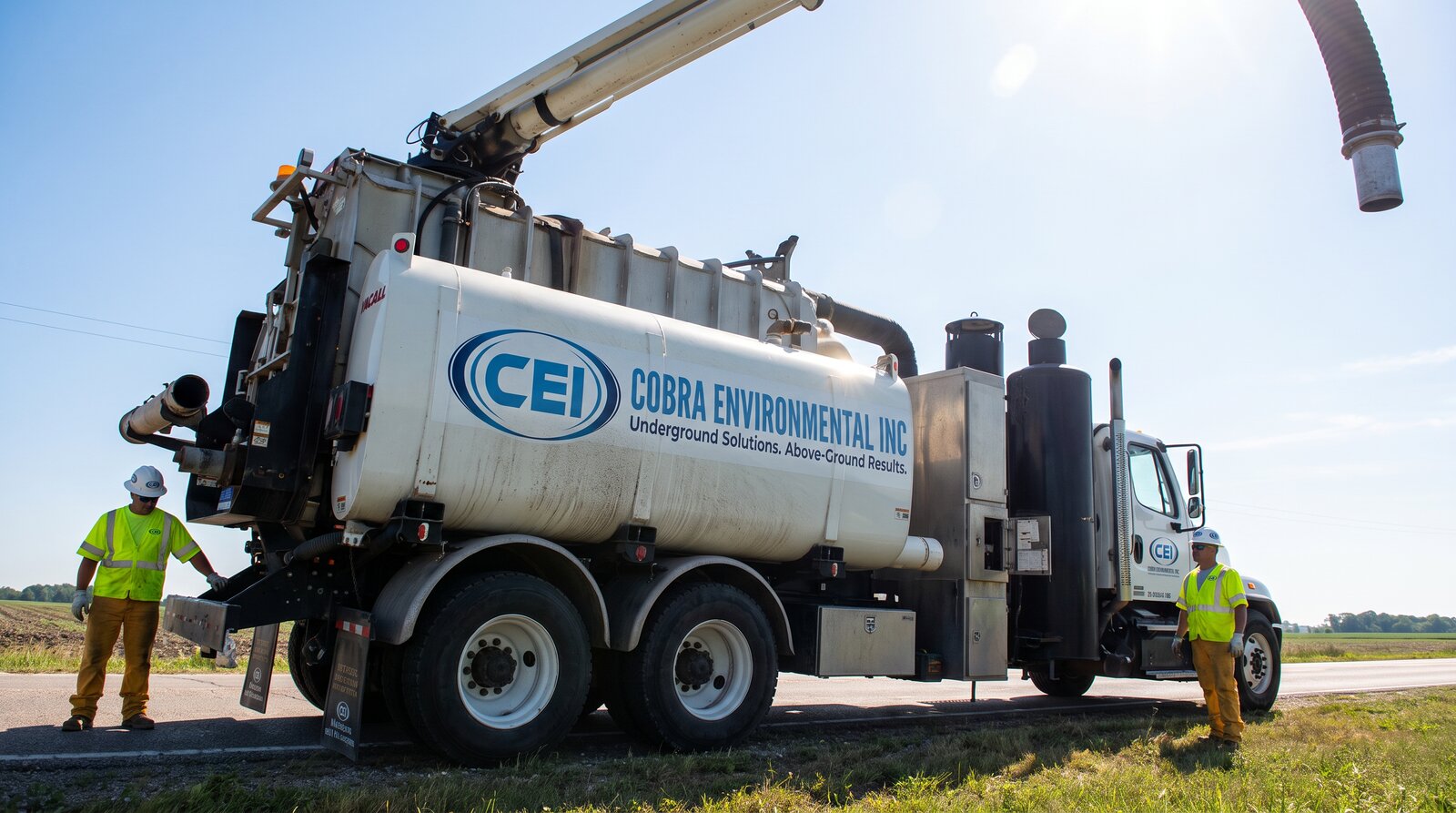
CEI's hydro excavation crews pothole, daylight, and expose live utilities with pressurized water and vacuum recovery — so what's marked on the plan matches what's actually in the ground, before anyone starts trenching, boring, or excavating.
Sunshine 811 marks give you a general corridor. They do not give you exact depth, exact offset, or the abandoned service that never made it onto a record drawing. That gap is where mechanical excavators strike gas lines, cut fiber, and turn a two-hour crossing into a full shutdown with regulators on-site.
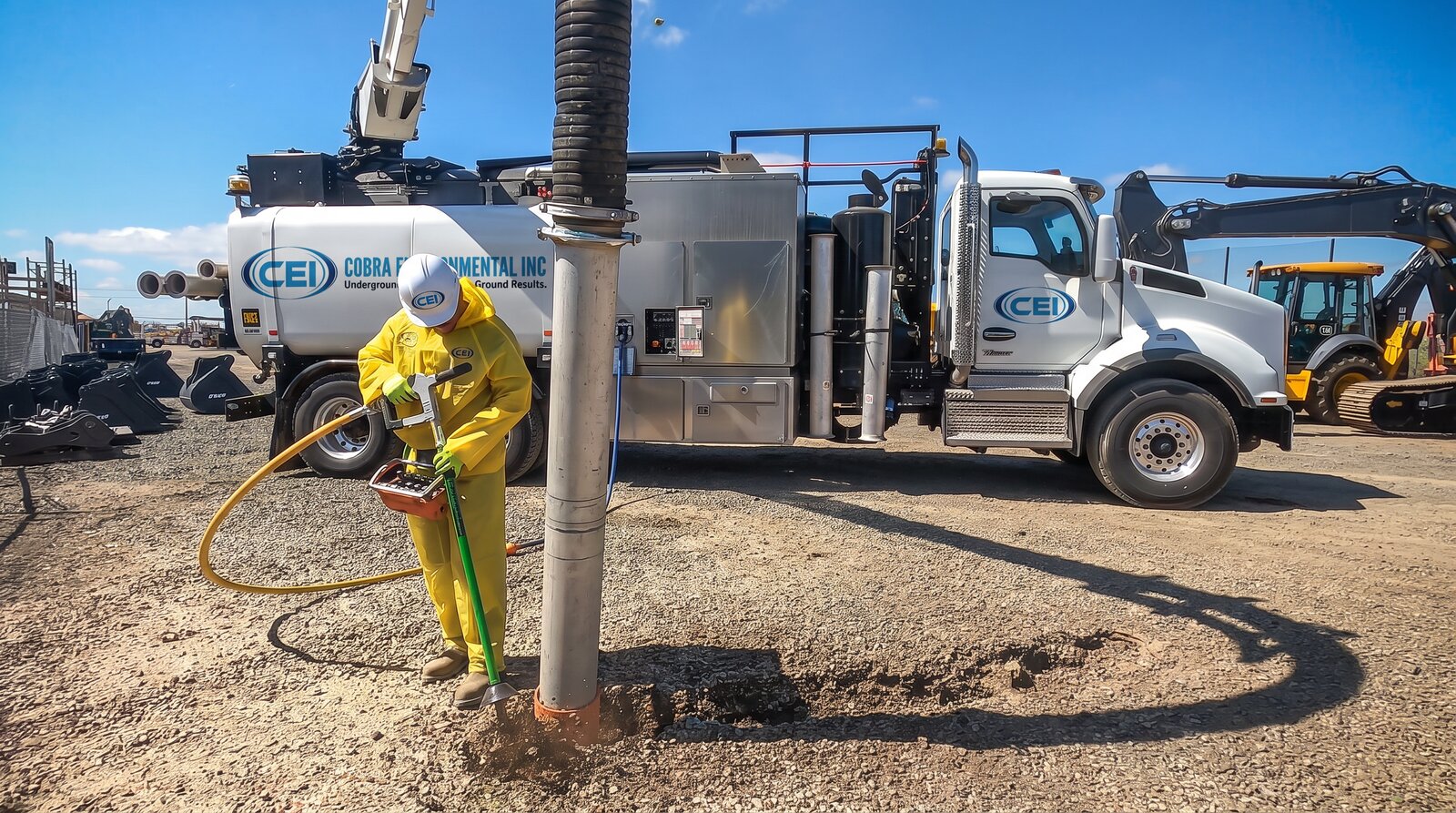
Hydro excavation closes the gap. High-pressure water breaks up soil, an industrial vacuum lifts the slurry into a debris tank, and the utility comes into view — untouched, uncut, and ready to be verified.
Our vac trucks stage curbside on a compact footprint. Hoses extend to the work area. The operator controls the wand from the surface, so no one is in the hole until the line is confirmed and safe.
The wand delivers a controlled, pressure-regulated stream that fractures soil, clay, and compacted fill without shock-loading whatever's underneath.
A high-CFM vacuum pulls the slurry up the boom-arm and into a sealed debris tank — no muck in the street, no spoils pile crowding the work zone.
Every exposure gets measured, photographed, and (on your request) staked or flagged. Clean spoils can be returned as native backfill to keep restoration light.
Whether you're designing a horizontal bore, staking a new tie-in, or troubleshooting a service line that isn't where the drawings say, hydro excavation gets the ground truth.
Expose crossings at proposed boring, trenching, or tie-in points so the design engineer gets confirmed depth and offset — before mobilization, not after a strike.
Full daylighting runs to expose long stretches of parallel or crossing utilities before excavators, directional drills, or micro-tunnel equipment arrive on-site.
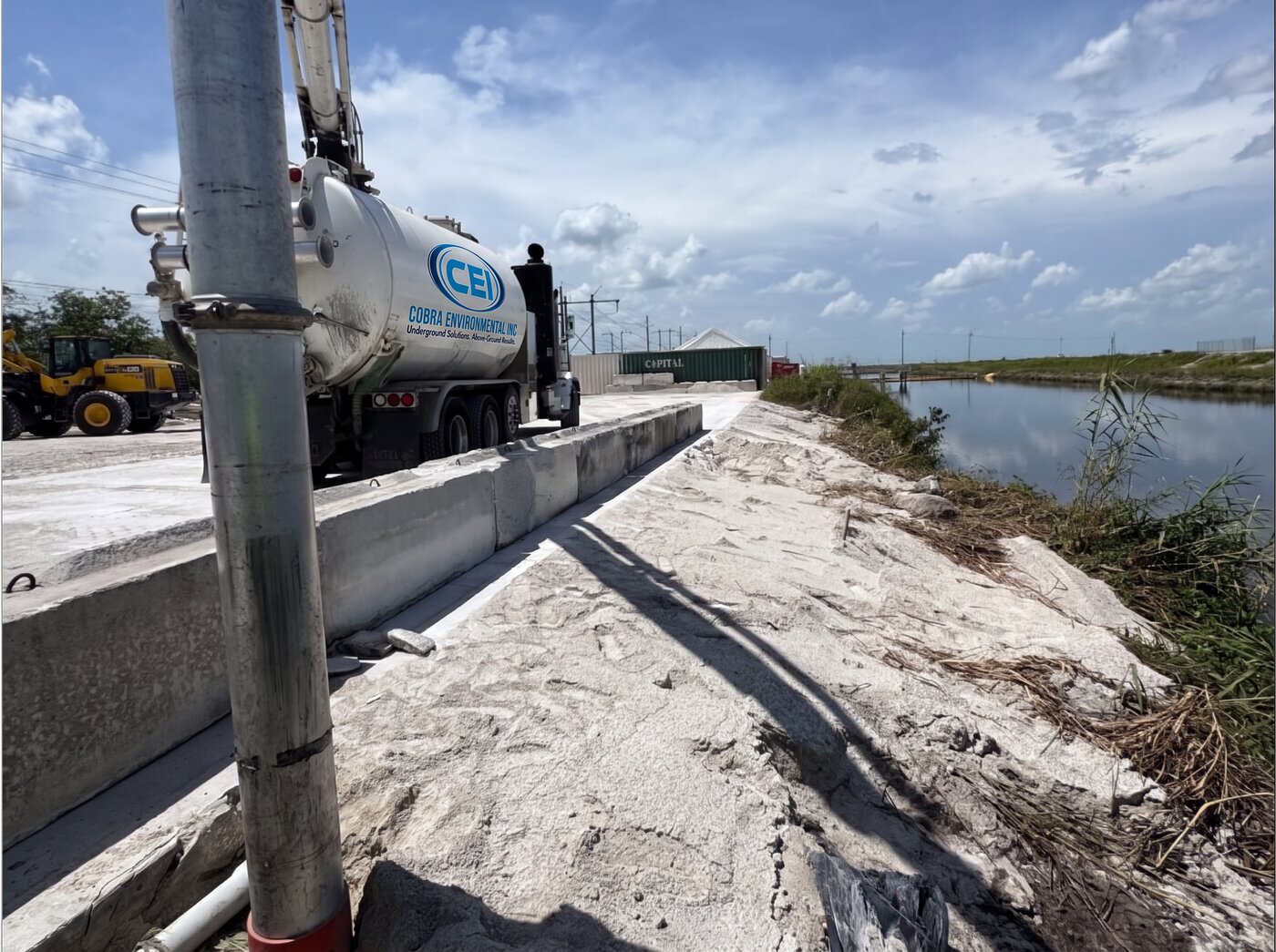
Backhoes need swing room. Our vac truck doesn't. When the work is next to a building, live traffic, an airport apron, or a fiber trunk, hydro excavation is often the only method that gets approved.
Every hydro excavation scope CEI runs closes out with the same documentation package. It's the difference between "we potholed the crossing" and a deliverable your designer, permitting reviewer, or utility owner can actually rely on.
A locate ticket paints a general corridor on the ground. It does not tell you the depth of the line, the exact horizontal offset, whether the line is where the record drawing says, or whether there are abandoned or unmarked services alongside it. Hydro excavation gives you an eyes-on-metal answer at the exact point that matters — the crossing, the tie-in, the bore path.
No. The pressure and stand-off distance are dialed in to fracture soil, not cut coatings or damage jacket materials. That's the whole point — hydro excavation is the industry-accepted method for exposing live gas, fiber, electric, and water without shock-loading them.
Yes. Our vac truck stages outside the work zone and the operator runs a hose into the excavation, which keeps the equipment footprint small and MOT plans clean. We coordinate with your traffic control team or bring our own for smaller scopes.
Standard scope is native backfill and either a cold patch or a flowable-fill cap, per your spec. If you need permanent asphalt or concrete restoration bundled in, we'll price that as a separate line item or coordinate with your paving sub.
Yes. Photos, depth and offset measurements, pipe/conduit ID, and a field sketch of what was exposed at each location — packaged in the format your designer or utility owner needs.
Often — especially with CIPP mainline crossings, manhole rehab tie-ins, or cleaning & CCTV programs where a service lateral or crossing needs to be confirmed before rehab. One crew, one PM, one closeout package.
Send us the location, the utilities you need exposed, and the timeline. We'll return a scoped hydro excavation quote with truck day-rate, per-hole pricing, and documentation format.